Banana Age for Introduction to Baby: (4)6-8 Months Old
Please remember that the current recommendation for introducing solid food to a baby is 6 months of age!
The Goodness of Bananas:
Bananas are an excellent source of nutrition and as such, are another perfect fruit to be one of infants first foods. Bananas are often called one of nature's perfect foods because they are said to contain everything a person needs to survive. One of the most important nutritional components of Bananas is that they contain potassium and fiber. Bananas are also high in Vitamin B6, Vitamin C and Vitamin B2.
The Potassium in bananas often gets a bad rap due to the confusion with sodium (salt). Potassium contributes to healthy blood pressure as well as healthy heart functions. Some studies have suggested that people who consume bananas and other foods high in potassium are less likely to develop atherosclerosis and high blood pressure.
Bananas are also known as one of nature's own antacids. They are known to help protect against stomach ulcers and ulcer damage. The reason for this seldom known and almost odd fact is that bananas contain "mucilaginous bulking substances". The help the intestines with producing a mucousy lining and are very very easy to digest.
Please be aware that bananas are also know to cause constipation when eaten in large quantities.
When can I introduce Bananas to my baby?
Bananas may be introduced to your baby as early as 4 months old. Please remember that the recommended age to begin weaning is 6 months old however. As always we recommend you consult with your pediatrician about introducing solid foods to your baby!
VITAMINS:
Vitamin A - 95 IU
Vitamin C - 11 mg
Folate (important during pregnancy) - 22.5 mcg
Vitamin B6 - .7mcg
Niacin - .6 mg
Pantothenic Acid - .31 mg
Vitamin E - .67 IU
MINERALS:
Potassium - 467 mg
Magnesium - 43 mg
Phosphorus - 27 mg
Calcium - 7 mg
Selenium - 1.3 mg
Iron - .4 mg
Also contains trace amounts of zinc, manganese and copper
The Best Convenience Food!
Besides all of the above fantastic healthy qualities, bananas are the one of the best convenience foods. They come in their own jackets and there is no need to wash them; simply peel & eat! This gives the banana a big thumbs-up for parents; when it comes time for and travel, take out a banana and feel great knowing that you and your children are indulging in one of nature's perfect foods! Check out the nutritional value of Bananas below:
A Few Basic Recipes:
Mashed Bananas (4)6 months +
1 Ripe Banana
Water, Formula or Breast Milk is desired
Peel and cut a ripe banana into small dices
Mash with a fork
There should be no need to use a machine as bananas, just like avocados, will have a very soft consistency and texture. Bananas do not need to be cooked.
Depending on your baby's age and stage, you may not need to add any liquid to the mashed banana. You may purée the banana in a food processor or blender if desired
Banana-Cado (4)6 months +
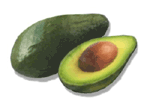
Peel and de-pit a ripe avocado
Cut “meat” out and mash with a fork
Peel and mash 1 banana
Place in a blender or food processor and puree until desired texture is achieved. Avocados and Bananas do not need to be cooked.
Bananas & Tapioca 8 months +
½ Cup Water
1/3 Cup Quick-cooking Tapioca
1 Banana
½ Cup plain or vanilla Yogurt
Bring water to a boil in a saucepan. Gradually add tapioca, stirring constantly. Reduce heat to low & cook 5 minutes, continuing to stir constantly. Separately puree the banana & add to the mixture. Blend tapioca with yogurt & banana.
Fried Bananas 8 months +
2 bananas
butter
cinnamon or ginger
in a small frying pan, gently heat 2 tbsp of buttter. Slice the bananas into thin slices or dices. Add bananas to the pan and sautee. Sprinkle with spices if desired and mash if needed.
A Few Foods Good to Mix With Bananas:
Cereals
Avocado
Blueberries
Kiwi
Peaches
Pears
Apples
Sweet Potatoes
Yogurt
Resources and Learning More:
American Heart Association -Importance of Potassium
Harvard School of Public Health - Heart Disease
Lebombo - Banana Information