- Home
- News & Blog
- Baby Food Recipes
- Foods for Baby
- Baby Food FAQs
- Puree & Store
- Food Allergy
- Tips & Topics
-
-
-
-
-
-
-
-
-
-
- Introducing Solids
- Baby Feeding Issues
- Infant Reflux
- Lactose Intolerance
- Iron & Baby
- Constipation
- When Baby has Diarrhea
- Table Foods
- When to Introduce Finger Foods
- Vegetarian Baby
- Picky Eaters
- Does Baby Need Water?
- Juicefor Baby
- Adding Salt to Baby Food
- Cereal in Baby's Bottle -
- My Baby is Orange.
- Does Baby Need Variety?
- Oxalates
- Dining Out
- Baby Refuses a Spoon.
- Using a Sippy Cup
- Transition to Milk
- More
- Sugar Substitutes
- Short-Cuts
- Food Out of Season?
- Bring on Curry.
- Read the Package
- Fruits Are Coming..
- Grist on Grains.
- Vitamin & Mineral Supplements
- Leftover Baby Purees
- Baby Safety Checklist
- Vitamins Found in Foods
- Baby Food Books
- Breastfeeding
- Safely Prepare Baby Food
- Methods of Storage
- Canning Baby Food
- Using Organics
- Daycare Homemade Food
- Traveling with Baby Food
- Day Trips with Baby Food
- Healthy Snacks
- Exploit Your Oven!
- Special & Holiday Recipes
- Downloads & eBook
-
Making Yummy Homemade Yogurt for Your Baby and the Whole Family
Did you know that it is incredibly easy to make your own homemade yogurt? Yogurt is loved by baby, toddler, child and adult alike. Yogurt may be a healthy natural part of your baby's diet and a yummy "treat" for your toddler. Homemade yogurt may also be incorporated into your whole family's diet in a variety of ways.
You don't need your own cow, you don't need to milk a cow, nor do you need your own lab for raising the yogurt starter cultures. All you need to make fast and easy homemade yogurt is one container of plain yogurt, milk, and a few other things that are already in your kitchen.
Tools for Making Homemade Yogurt
Here are some of the typical tools you need to make homemade yogurt for your baby and family:
-
Heavy-duty pot; many yogurt makers prefer using a stainless steel pot
-
Cheesecloth
-
Plastic strainer/colander
-
Stainless steel or plastic spoon
-
2 to 3 quart jars (sterilized)
-
Measuring cup
-
Instant-read thermometer
-
Picnic cooler (optional)
- Thermos (you may make homemade yogurt in a thermos.)
Homemade Yogurt Recipe (without using a Yogurt Maker)
You can use 3 tablespoons of any plain commercial yogurt with LIVE cultures as your starter culture for homemade yogurt. You may also buy a commercial "yogurt starter" that contains live cultures. Look for these at your local natural food store or in the natural sections of your local grocer.
Heat 1 quart milk to about 185 degrees, or as directed by the commercial product’s instructions.
Allow it to cool to between 105 and 115 degrees. Stir in the culture and mix well or add 3 tablespoons of any plain commercial yogurt with LIVE cultures.
Pour the mixture into a quart jar and put on the lid.
While the culture is forming, the temperature of the milk should remain at about 110 degrees.
If you don’t have a commercial yogurt maker to regulate the temperature, try one of these ideas to keep your homemade yogurt warm:
-
Put the quart jar into an airtight picnic cooler with a couple jars of hot water, then close the cooler tightly.
-
Put the quart jar of yogurt mixture into a gas oven with a pilot light.
-
Put the mixture into a thermos bottle.
- Wrap the jar of yogurt in a blanket.
Homemade Yogurt Recipe 2 (without using a Yogurt Maker)
Makes about 8 servings of Homemade Yogurt
Ingredients:
1/2 gal. whole milk
1/2 cup yogurt (starter)** You can use up to one cup. (make sure plain yogurt container states "live culture")
1/2 pint heavy cream (Optional for more richness)
Directions:
Pour the milk into a saucepan and bring to a boil, be sure to stir constantly. When milk comes to a boil, add 1/2 pint of heavy cream, and pour into an earthen bowl or Pyrex dish.
When the milk and cream mix has become lukewarm, stir the starter (the commercial yogurt) and dilute it with some of the lukewarm milk mix until it is smooth
Pour the mixture of diluted starter into lukewarm milk/cream mix and stir.
Wrap the warm milk (with yogurt starter), and leave it in a warm place, undisturbed, for at least 8 to 10 hours. (See above for methods to keeping the yogurt warm.) Yogurt should be set by then. Place pot in refrigerator until cold, and ready to serve.
When is the Homemade Yogurt ready?
You should check the yogurt in four to six hours or 8-10 depending on the recipe you use and/or the yogurt maker you purchase. You should see that the curd is formed. When the homemade yogurt curd has formed, put the yogurt in the refrigerator.
A little whey may form around the edges (the liquid you often see in containers of commercial yogurts is the whey.). You may stir in the whey or pour it off. The whey will give you some extra nutrients so stirring it in is a good option.
To flavor homemade yogurt for your baby, stir in some fruit purée's, some vanilla, or other spices that you think your baby may like.
-
Yogurt and Blueberries
-
Yogurt with applesauce and a dash of cinnamon
-
Yogurt with peaches and bananas together (and separate)
-
Yogurt with Wheat Germ and no other addition
-
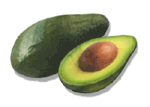
Yogurt and mashed avocado
- Yogurt blended with any fruit and water to create a baby-smoothie (using water makes for a thin mix that may slide through a Sippy Cup with ease)
Tips for Homemade Yogurt Using 1 container of Plain Yogurt as Your Starter:
- Make sure the label indicates "Live Active Cultures".
- Check the expiration date. Yogurt culture becomes weaker over time.
- Use only plain yogurt as flavored/sweetened varieties will not work.
Tips for Making Homemade Yogurt from Scratch (without using pre-made yogurt)
Make sure all utensils, container and lid are clean. The smallest specs of dirt may affect the growth of yogurt culture.
You should always add any flavoring, sweeteners and fruit after the processing and refrigeration of your homemade yogurt.
If using raw milk or pasteurized milk that has been refrigerated for some time, boil it for a few minutes before cooling to the desired temperature. Boiling kills any bacteria that can interfere with the incubation of the yogurt cultures.
Whole milk makes the thickest, creamy yogurt because it contains the most solids.
If using 2% milk, you may try and add ½ cup of powdered milk per 2 quarts of 2% milk to help thicken the yogurt.
Skim milk may require adding 1 cup of milk powder per 2 quarts of skim milk or ¼ ounce of unflavored gelatin. (ick. - why would you make healthy natural yogurt out of skim milk if you have to add gelatin?)
Goats milk may be used to make yogurt (note goat's milk does contain lactose so it may not be a good substitute for a baby or adult who is lactose intolerant) should be treated as skim milk.
Soy milk may affect consistency of the homemade yogurt as it does not contain all the fats of cow milk. Commercial pre-made soymilk that has added sweeteners such as fructose, malt or honey is required to allow the yogurt culture fermentation process to take place. Do not use soy milk powder.
Milk powder mixture doesn’t need to be brought to boil, just to the 100°F to 110°F temperature.
|
|
|
|
||
Headlines from our Baby Food Blog
Making Fruit Butters for Baby's Food
Solid Foods for Baby
Useful articles and charts to help you with the fun and folly of introducing baby to solid foods.
MORE HOMEMADE BABY FOOD RECIPES & RECIPE TOPICS
View these pages for more tips & topics on baby feeding & cooking baby foods.