Wholesome Baby Food Recipes Blog - A Homemade Baby Food News Blog

Wholesome Baby Food Recipes Blog - Our Baby Food Blog updates you on baby food news, baby food recipes & updates to WholesomeBabyFood.com.


Wholesome Baby Food Recipes Blog - A Homemade Baby Food News Blog header image 1

Congrats to Elizabeth - Monthly Baby Food Recipe Contest Winner

July 1st, 2009 · No Comments

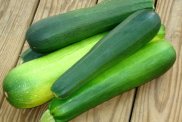
We’ve just sent Elizabeth a $25.00 gift certificate good at Amazon.com. Her baby food recipe was chosen as the winning recipe for our June 2009 Baby Food Recipes Contest. Elizabeth sent us a recipe for Zucchini pancakes that is quick and easy. We’re bumming that the rain (for the last 40 days and nights 26 days) has most likely decimated our summer and zucchini squash :-(

We’re posting her recipe below and encourage you to submit your baby food recipe and enter our monthly contest. You can also see winners from the past months here

Elizabeth’s Zucchini Pancakes

Ingredients:

1 grated zucchini (or summer squash)
1/2 clove grated garlic
1 tbsp. grated onion
2 tbsp. whole wheat flour
1 egg yolk
1 tsp. olive oil

Prep and Cook: Put all zucchini in a clean kitchen towel and squeeze all liquid out. Put in medium mixing bowl. Add garlic, onion, egg, and flour and mix with clean hands to combine.

In small skillet, heat olive oil over medium heat. Remove golf-ball size ball of batter. Pack into a pancake and put in skillet. Cook about 3 minutes on each side or until golden brown on both sides.

Tips and Age: This is great slathered with a bit of ricotta cheese! My son (9 months) loves these little pancakes as finger food, and I love them too! We started these at about 8 months and DS can’t get enough of them!

[Post to Twitter] 

→ No CommentsTags: Baby Food Recipes Updated · Finger Foods · New Baby Food Recipes

Baby refusing the Bottle - Are Solids to Blame, Can You Help this Mama?

June 30th, 2009 · 4 Comments

We received an email today from a Mama who’s concerned that her little one is no longer interested in the bottle.  Ugh how we remember that one!  It was a tough time getting my twins to latch and when it came time to switch to formula months later, it was tougher to get them to accept a bottle.  Things were going along great, they began to refuse the bottle too!  What’s a Mom to do?

Well it’s not a simple answer that’s for sure and this strike occurred when the twins were about 9-10 months old.   Tamara’s little one is much younger and we introduced solids much later so our advice is probably not good for her.  We rode out the 2 weeks of disgusted looks and turned heads and broke out the sippy cup!  Now this is not scientific but my theory is this - boredom with the taste as well as the same ole’ bottles.  Mind you our bottle strike lasted for about 2 weeks and then we were off to sippy cup land with bottles for the “lazy” times.  So here’s our visitor’s question:

I was hoping you might have an answer to a question.  I started introducing foods at 4 months and since then my now 5mo. 3wk old is very resistant to her bottle feedings.  Have you had or heard of any experience with this.  This may or may not have anything to do with feeding solids but I was wondering if other mom’s had problems with bottle feeding after intro of solid food.  It’s a challenge to get her to take 20 oz of formula a day now.  Thanks for any response.

Are you offering the solids before the bottle?  If so, stop and offer the bottle first.  Solids at that age are for practice and baby’s main nutrition comes from formula.

Are you offering large bottles or small bottles?  You could try to divy up the amount and offer smaller more frequent bottles.

Could baby be teething?  Does she tend to mash on the nipple, have you changed bottles or nipples?  If she is teething, the nipple and vigorous sucking might be painful.

Ok Mamas, it’s your turn!

[Post to Twitter] 

→ 4 CommentsTags: Friendly Baby Food Advice

Activia and Toddlers - Thank you Danone!

June 26th, 2009 · 5 Comments

I’d like to send kudos to the folks at Danone/Activia for being so responsive to the inquiry about Activia and Toddlers.   Their PR guy Michael was very helpful and responded quickly and thoroughly.  It’s nice to know that this company cares about it’s consumers concerns!  Below you will find the statement from Danone/Activa about feeding kiddos age 3 and under Activia:

Maggie,
Per the message I left for you in response to your question, the change in the Frequently Asked Questions on the Activia web site in the USA was made as part of a routine update to ensure consistency and accuracy. Like any yogurt, Activia is suitable for the whole family and can be included as part of a balanced diet. However, for children under age 3, as with all matters involving a child’s diet and health, we recommend you check with your child’s pediatrician.

Each child develops differently, so the transition to solid foods may occur at different times for babies of the same age. Most babies can begin solid foods by 4 to 6 months. Whole cow’s milk is not recommended before 12 months because of digestive difficulties and it lacks certain nutrients that are important for a growing infant.

Always consult with your baby’s health professional to determine the most appropriate age to introduce yogurt. The American Academy of Pediatrics recommends that most babies can begin consuming yogurt at around 6 months.

Infants need more energy and fat because they are growing rapidly at this stage. Pediatricians recommend that children 12 to 24 months consume whole milk rather than skim, 1%, or 2% milk. Yogurt made with whole milk, such as Dannon’s Natural Plain Yogurt is a good choice.

As children get older, they don’t require as much fat within their diet. After the child’s second birthday, fat intake can be reduced gradually until it makes up about 30 percent of the total daily calories. Dannon makes products with additional nutrients appropriate for this age group such as Danimals Crush Cups and Danimals Drinkables.

As noted in our original post about Activia and Toddlers, and as recommended by Danone/Activia, always consult with your pediatrician about foods for your little one.

[Post to Twitter] 

→ 5 CommentsTags: Dairy · Dangerous Food Items · Friendly Baby Food Advice · Nutrition

Yogurts for Babies and Toddlers - Activia

June 18th, 2009 · 3 Comments

This post is prompted by an email we received 2 days ago from a visitor.  She sent in the following:

I found your site by Googling “Can Toddlers eat Activa yogourt”, the reason being that my husband bought Activa for our 18 month old recently instead of Stonefield YoBaby. Soon afterwards he started suffering diarrhea and the only food item that was different was Activa… Thank you so much for the artical!

Activia yogurt has not been recommended for babies and children under the age of 3 years of age.  While some of the Danone/Actvia sites explain why,  others do not go into detail and 2 sites have taken the warning out of their product FAQs altogether.

Back in 2006 when we first wrote our Baby Yogurt/Bad Yogurt article, we quoted directly from the Activia/Danone US website:

Is Activia® suitable for children?
Yes, Activia® is suitable for the whole family, including children age three and older, who are looking to eat a healthy, balanced diet.

The Activia/Danone site in Australia states

“Is Activia® suitable for children? Yes, Activia is suitable for the whole family, including children age three and older, who are looking to eat a healthy, balanced diet. ”

The Activia/Danone UK site states the following:

“Activia® is suitable for the whole family but it is not specially formulated to meet the nutritional requirements of infants or young children so it is not recommended for those under 3 years old. If you have any concerns about the suitability of Activia for your child please discuss it with your GP or dietician.

Today, the Activia/Danone US website, like  the website for Canada, mentions nothing about “including children age three and older” and instead states
“Is Activia® suitable for children? It is suitable for the whole family, including children who are looking to eat a healthy, balanced diet.”

These 2 websites for the US and Canada have removed the statement that it is suitable for children 3 and older!  Perhaps this is a simple oversite on the part of the website editors.  We have sent an email to Danone to ask about this.

While Activia/Danone note that the yogurt is not meant to relieve constipation or to prevent it,  they also note that the yogurt will help with a “slow intestinal tract”.  Translation, this yogurt may help get the bowels moving and keep them regular.  This might be one reason why the yogurt is not recommended for children under the age of 3 years old (???)

The US site notes:

Does Activia® or Activia Light prevent constipation?
Activia® and Activia Light were studied in adults presenting slower but still a physiological normal intestinal transit, and not in the pathological context of constipation. Activia® and Activia Light are not medications; they are foods that, through regular consumption, help with slow intestinal transit.

Since Activia® and Activia Light help with slow intestinal transit does that mean they contain fiber?

Activia Light does contain 3 grams of dietary fiber due to the presence of inulin. However, regular or original Activia® does not contain fiber. The fact that regular Activia and Activia Light helps with slow intestinal transit is due to the specific bifidobacterium culture called Bifidus Regularis™. This culture was specifically selected because of its ability to survive passage through the digestive system and reach the large intestine, giving Activia® and Activia Light its specific beneficial properties related to your digestive health.

Could you say that Activia® and Activia Light are laxatives?
No. A laxative is a medication formulated to treat constipation. Activia® and Activia Light are not medications -they are conventional foods with a natural culture called Bifidus Regularis™.

Activia® and Activia Light are clinically proven to naturally help regulate your digestive system by helping with slow intestinal transit. They do not cure or prevent constipation, which is a medical condition.

We will also mention that due to the presence of fructose, sugar, gelatin and starches, we feel your family would be better served purchasing a more natural yogurt without these fillers and sweeteners!

As always, we recommend that you consult your pediatrician about any foods that you wish to offer your babies and toddlers.  Until you have discussed Activia yogurt with your pediatrician, we recommend waiting until your kiddos are 3 years of age or older.  When we receive a reply from Danone, we will post it here as a comment.

[Post to Twitter] 

→ 3 CommentsTags: Dairy · Dangerous Baby Items · Dangerous Food Items · Friendly Baby Food Advice · Nutrition

Baked goods for Baby - Using non-wheat flours in baby’s baked goods recipes

June 16th, 2009 · 2 Comments

If your baby (or anyone else in the family) has been diagnosed with a gluten intolerance or an allergy to wheat, this wheat-free flour blend is for you. Many parents want to make their little ones homemade teething biscuits or other baked goods but due to an allergy or intolerance, they can’t. Try the mix below.

From Land O’Lakes:

To help you bake gluten-free, the Land O’Lakes Test Kitchens developed a Gluten-Free Flour Blend. It’s easy to make and store, and has been used in many recipes with consistent and delicious results. It’s made with alternative flours that are easy to find in your supermarket:

Rice Flour - this alternative flour has neutral flavor and provides a light, somewhat sandy texture that is reduced when mixed with other substitute flours in baking.

Potato Starch - this is a fine, light powder that lightens baked goods and is also mixed with other alternative flours to achieve a satisfactory texture. Potato starch tends to clump, so always mix well for best results.

Tapioca Flour - this ingredient is also known as tapioca starch or manioc. This ingredient gives baked goods their desirable chewy texture and lightens them up. It also helps to give a lightly browned appearance to a crispy crust.

When you want to bake without gluten, use this mix for a variety of baking recipes such as cookies, cakes and quick breads.

Preparation time: 5 min Yield: 3 cups

2 cups rice flour
2/3 cup potato starch
1/3 cup tapioca flour
1 teaspoon xanthan gum

Combine all ingredients in large bowl; stir.

Use mixture in baking recipes. Store mixture in container with tight-fitting lid.

View more wheat and egg substitutes

[Post to Twitter] 

→ 2 CommentsTags: Allergies · Forbidden Foods · Friendly Baby Food Advice · Substitutes