Infinite Menus, Copyright 2006, OpenCube Inc. All Rights Reserved.

Myths and Facts About Nitrates and Homemade Baby Food - Read our Nitrates Information page and learn the facts.

advertisement 


What does the AAP really say about Nitrates and Homemade Baby Food?


The AAP recommends NOT preparing these foods <carrots et al> for a baby who is younger than 3 (three) months old! 


For spinach, it's nitrate levels may actually increase with improper storage, they recommend 8 months old!


aap AAP Statements from Policy Papers


"Because the intake of naturally occurring nitrates from foods such as green beans, carrots, squash, spinach, and beets can be as high as or higher than that from well water, these foods should be avoided before 3 months of age, "

and "Preventive strategy would be not to introduce home preparations of these vegetables to infants before 3 months of age, although there is no nutritional indication to add complementary foods to the diet of the healthy term infant before 4 to 6 months of age.23 Infants fed commercially prepared infant foods after 3 months of age generally are not at risk of nitrate poisoning, although the containers should be refrigerated after first use and discarded within 24 hours of opening. " American Academy of Pediatrics - Nitrate Statement and

"
Because vegetables, including green beans, carrots, squash, spinach and beets, can have nitrate levels as high or higher than that of well water, infants should not eat these foods until after age 3 months."
AAP Well Water Statement


What Vegetables contain Nitrates?


The highest concentration of nitrates occurs in water, root vegetables and leafy vegetables such as spinach, lettuce and other greens.


The concentration and amount of occurring nitrates will vary depending on the type of vegetable, the temperature that it is grown at, the sunlight exposure, soil moisture levels and the level of natural nitrogen in the soil.


Foods that tend to accumulate the highest amount of nitrate include:

    • spinach
    • beets
    • cabbage
    • broccoli
    • carrots


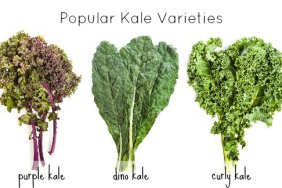
Root vegetables such as carrots, beets and broccoli all contain nitrates though at a much lower level than do the leafys. Leafy vegetables include spinach, cabbage or other greens like Kale.

Nitrates and Commercial Baby Foods - Are Commercial Baby Foods Nitrate Free? Are Commercial Baby Foods Safer When it Concerns Nitrates and Feeding Baby?


Jarred commercial baby food carrots (and other jarred commercial baby food vegetables) have nitrates too! Nitrates are naturally occurring and thus cannot be removed! Even jarred organic carrot baby foods have nitrates.


Commercial baby food companies will tell you that they SCREEN for nitrate levels, not that they remove nitrates. They also note that they do this voluntarily - because there is no law that requires them to do screening.  There is NO government regulation, law or mandate that commercial baby food companies must screen for nitrates. 


Commercial baby food companies may buy veggies that are grown in a part of the country where the nitrate contamination of soil is lower, where the sun shines more or where Farmer's do not use high levels of nitrogen containing fertilizers.


Do Commercial Baby Foods Have Lower Nitrate Levels?


Due to screening, commercial baby foods may contain a lower level of nitrates than homemade as parents do not have the ability to screen veggies for nitrates.


Please keep in mind that baby food companies voluntarily screen for levels of nitrate and there is no Federal (U.S.) regulation or mandate requiring them to screen.


Again, nitrates are naturally occurring in the vegetable itself and even the folks at Gerber/Beechnut/Heinz et al. cannot remove nitrates.

What are Nitrates and What is Blue Baby Syndrome?


When we first hear of nitrates and carrots, “Blue Baby Syndrome” and homemade baby food, it is often with a bit of fear and trepidation that we proceed to make baby’s food. We wish to do the best for our babies and we certainly do not want to poison them! Let’s take a moment to look at the facts about nitrates, infants and making baby food.


Nitrates are naturally occurring nitrogen/oxygen salt compounds found in almost every vegetable that we eat and the soils they are grown in. Nitrates are also laboratory formulated and used in fertilizers. Nitrates are ingested either from vegetables or drinking water. Nitrates/nitrites have been found to be responsible for "Blue Baby Syndrome." Adults are not affected by nitrates or nitrites because their stomachs produce acids that fight the bacteria that help convert nitrates into nitrites. This conversion, and the resulting nitrite, is what allows for nitrate poisoning or “Blue Baby Syndrome.”


The name “Blue Baby Syndrome” stems from the fact that nitrites hinder proper oxygen transportation in the red blood cells. “Once in the blood, nitrite oxidizes iron in the hemoglobin of red blood cells to form methemoglobin, which lacks hemoglobin's oxygen-carrying ability.”1 Without proper oxygen saturation in the blood, the body’s cells become oxygen deprived and the skin takes on a blue or purple hue. This oxygen deprivation may lead to the slow asphyxiation of the person poisoned.


What are the Symptoms of Blue Baby Syndrome?

"The most obvious symptom of nitrate poisoning is a bluish color of the skin, particularly around the eyes and mouth. This is called cyanosis. A baby with these symptoms should be taken to an emergency medical facility immediately. The doctor will take a blood sample to be sure the baby is suffering from nitrate poisoning. The blood sample of an affected baby is a chocolate brown instead of a healthy red. Nitrate poisoning can be treated, and in most cases the baby makes a full recovery. http://ohioline.osu.edu/b744/b744_2.html

What are the odds that my baby will get Blue Baby Syndrome?


It is important to note that the odds of your baby getting "Blue Baby Syndrome"  nitrate poisoning from Carrots or other veggies is about 0%.   By the time you introduce solid foods to your baby, his tummy should be developed enough to handle "normal" nitrate exposure.


"Around the age of three months, an increase in the amount of hydrochloric acid in a baby's stomach kills most of the bacteria that convert nitrate to nitrite. By the time a baby is six months old, its digestive system is fully developed, and none of the nitrate-converting bacteria remain. In older children and adults, nitrate is absorbed and excreted, and Methemoglobinemia is no longer a concern." http://ohioline.osu.edu/b744/b744_2.html


Yes, while nitrates are an important issue, they are highly unlikely to poison your baby from the carrots that you make!  Many pediatricians will tell you to not make homemade carrots while many other pediatricians will shrug off Nitrates and tell you there is no issue and no risk. 


Nitrate poisoning is very very rare and when it does occur, it is typically traced back to ground water contamination – specifically from contaminated private wells.2

What about using Organic Vegetables to eliminate or decrease nitrates?


If you prefer to make your own homemade baby foods vegetables that may contain nitrates, an alternative is to choose organic produce.


Organic foods are grown without the use of commercial nitrate fertilizers and thus the risk of nitrate contamination/concentration is minimized, but not eliminated.


Freezing "nitrate veggies" does NOT increase nitrates


Studies done on spinach and nitrates in particular have shown that with improper storage and preparation, the nitrate levels may actually increase. Proper preparation and immediate use or storing via freezer method will help eliminate this risk (the increase in nitrate level) in leafy vegetables.

Will Boiling Vegetables Eliminate Nitrates?


Boiling vegetables in water will not eliminate nitrate concentration.


Nitrates may in fact seep into the water used for cooking.  It is best to not use that water as the liquid to make your puree. Always use fresh water when pureeing vegetables that may contain nitrates and discard the cooking water.

Who is Most at Risk of Nitrate Poisoning?


So who is most at risk for nitrate poisoning? People who have private wells are at risk for nitrate exposure; Babies under the age of 6 months old are most at risk and babies under the age of 3 months old even more so.


Babies who are over the age of 6 months old have developed the stomach acids necessary to fight the bacteria that helps nitrate conversion and subsequent nitrate poisoning. Infants who are formula fed and live on farms or in highly agricultural areas may also be at greater risk. Nitrates used in farming, and the excess not taken in by the crop itself, easily run-off and may seep into water tables, contaminating water supplies.


As mentioned earlier, nitrate poisoning is very rare and when it does occur, it is typically traced back to ground water contamination – specifically from contaminated private wells.2 If you have any doubts or fears, please speak to your pediatrician!


Wholesome Homemade Baby Food News & Updates


chich
advertisement

1. Ziebarth A. (1991), NF91-49, Well Water, Nitrates and the "Blue Baby" Syndrome Methemoglobinemia; Lincoln, NE; University of Nebraska Cooperative Extension.
2. Illinois Department of Public Health, Division of Environmental Health

Commercial Baby Foods Contain Nitrates too! Homemade Baby Food often gets a bad rap due to Nitrates. There are many misconceptions about nitrates and many of these are perpetuated by resources that simply do not know the fact.


Nitrates are naturally occurring in the vegetables and even the folks at Gerber/Beechnut/Heinz etc. cannot remove nitrates.


We've put together some useful information regarding nitrates and homemade baby food. We hope that it will help you understand why the risks are about 0%

STARTING BABY ON SOLID FOODS

Useful articles and charts to help you with the fun and folly of introducing baby to solid foods!


Please be sure to visit our Baby Food Articles Library for more great information about solid foods!

Visit our Baby Food Blog & Check out our Mini Contests!

********
Baby Food Cubes May Be Safely Kept in the Freezer for 3 Months. 

It is preferable, not an absolute must, to use the cubes within 1 month however.


blog
Visit our blog!

© Copyright 2003-2009 wholesomebabyfood.com. All Rights Reserved. Information in this website is not meant to be taken as medical advice, we are not licensed medical physicians, and thus the information presented should not replace the medical advice of your doctor or pediatrician! Contents of this website may be reproduced only for personal use. Contents may not be reproduced for other use without the express written consent of wholesomebabyfood.com. Privacy Policy & Notices